
There's a specific kind of tired that comes from explaining, again, that "a little bit" isn't safe. Food allergy parents don't want pity and they don't want special treatment they want to be believed the first time, without having to prove it.
This post is for the grandparents, teachers, coaches, party hosts, and friends who want to get it right but aren't sure what "getting it right" actually looks like. And it's for allergy parents who've wished, more than once, that someone would just say this out loud.
Quick Answer: What Do Food Allergy Parents Most Want Others to Understand?
Food allergy parents most want others to understand that a food allergy is a medical condition, not a preference; that "a little bit" is never safe; that cross-contact matters as much as the ingredient itself; that being asked in advance is always welcome; and that their vigilance isn't overprotection it's the difference between a fun day and a hospital visit.
1. It's a Medical Condition, Not a Preference
"Picky eater" and "allergic" are not the same category, and the mix-up costs trust. A food allergy triggers the immune system it can mean hives, swelling, difficulty breathing, or worse. It is never about taste, and it is never a phase to be gently pushed through.
2. "Just a Little Bit" Is Never Okay
This is the single most common misunderstanding. For someone with a true food allergy, a trace amount a shared spoon, a fryer used for something else earlier can be enough to trigger a reaction. Portion size doesn't make an allergen safer. There is no "small exposure is probably fine."
3. Cross-Contact Is Just as Real as the Ingredient Itself
A dish with no nuts in the recipe can still be dangerous if it was prepared on the same cutting board as one that did. Food allergy parents aren't being difficult when they ask about prep surfaces, shared fryers, or utensils they're asking about the actual mechanism of risk.
4. Reading the Label Every Single Time Isn't Paranoia
Manufacturers change formulations without warning, sometimes without changing the packaging in any obvious way. A snack that was safe last month can quietly become unsafe. That's why allergy parents check labels on products they've bought a hundred times before it's due diligence, not distrust of you specifically.
5. Asking in Advance Is Always Welcome - Guessing Isn't
A quick text before a playdate or party "What can/can't he have, and is there anything I should know?" genuinely makes a food allergy parent's whole day easier. It's a far better default than assuming, substituting an ingredient without mentioning it, or hoping it'll probably be fine.
6. Being Excluded From Food Feels Different Than Being Excluded From Everything Else
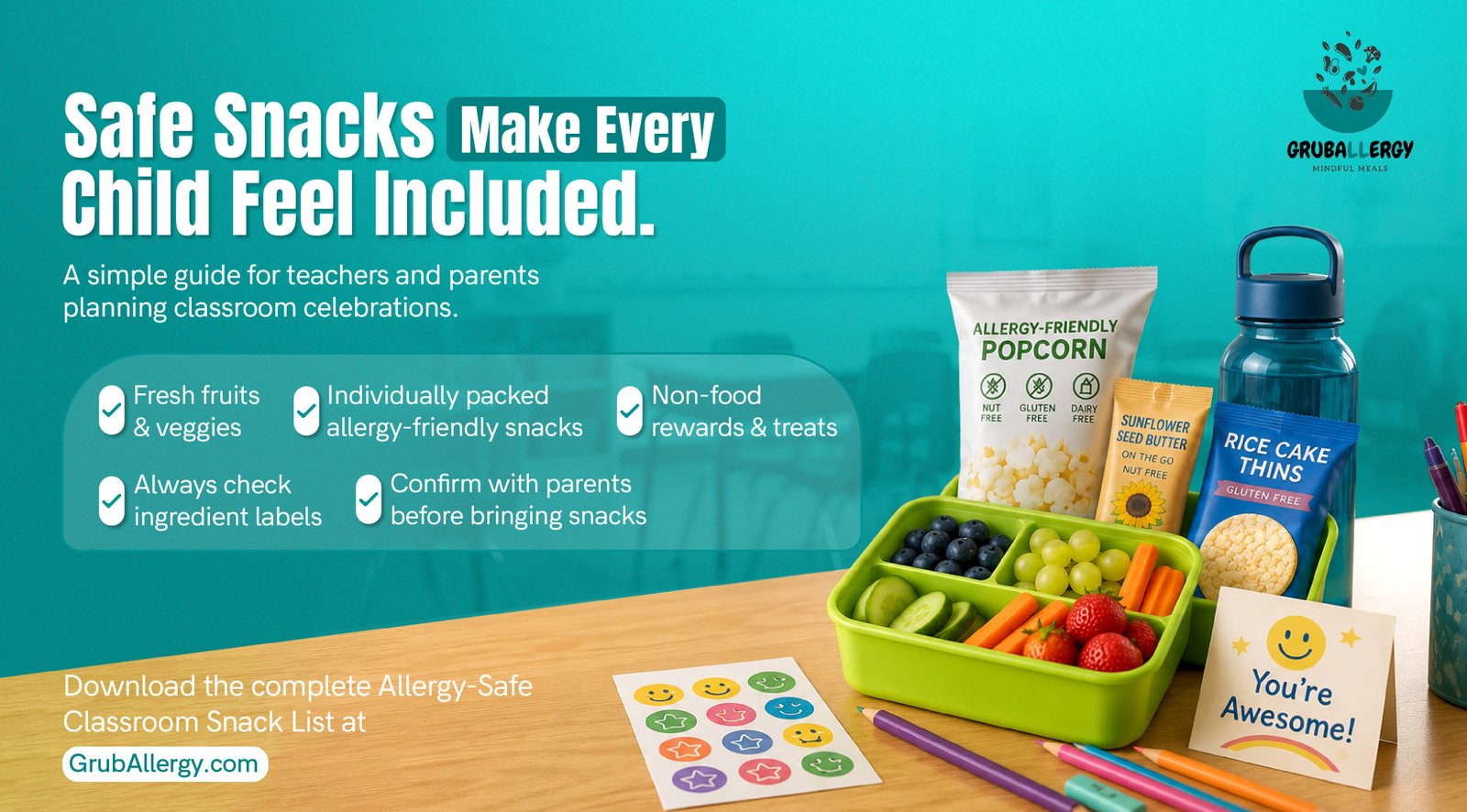
When a child with food allergies has to sit out the cupcakes at a party, that's a small but real moment of feeling different. It helps enormously when hosts offer a heads-up so a parent can send a safe alternative the child gets to join in, just with their own version. Our -friendly snack recipes and kids-friendly recipes are built for exactly these moments treats that let a child feel included, not singled out.
7. Vigilance Isn't Overprotection
Double-checking, asking questions, packing backup food, carrying epinephrine everywhere this can look like anxiety from the outside. From the inside, it's simply what responsible management of a real medical risk looks like. It's not a sign the parent needs to relax; it's a sign the system is working.
8. "They'll Grow Out of It" Isn't Always True, and It's Not Helpful Advice
Some children do outgrow certain allergies, particularly milk and egg allergies, while others like peanut and tree nut are more often lifelong. Either way, well-meaning predictions don't change what needs to happen today. What helps more is simply respecting the current plan.
9. An Epinephrine Auto-Injector Isn't a Last Resort - It's the First Response
Some people hesitate to use an epinephrine auto-injector, worried about "overreacting." Food allergy parents want the people around their child to know: if there's a reasonable suspicion of a reaction, using it immediately is the correct call, not an overcorrection. Delaying it is the actual risk.
10. This Family Would Love to Just Relax Too
None of this comes from a place of wanting to be difficult or high-maintenance. Food allergy parents want the same relaxed birthday party, the same easy sleepover, the same worry-free lunchroom as everyone else. The extra questions and precautions are the path to that ease not the opposite of it.
Final Thought
Understanding a food allergy isn't about memorizing every ingredient list it's about believing a family the first time, asking instead of assuming, and recognizing that the extra questions are what make the fun stuff possible, not what gets in the way of it.
Looking for treats the whole party can enjoy, allergy or not? Browse our lunch box specials or get personalized guidance through our free allergy consultation.
FAQ
-
Ask specifically what the child is allergic to, whether trace amounts or cross-contact are a concern, and whether the parent would prefer to send a safe alternative themselves. A simple message in advance is always appreciated.

-
No. For a true food allergy, even a trace amount can trigger a reaction. There is no safe "small exposure," which is why strict avoidance is the standard approach.
-
Some allergies, particularly to milk and egg, are more commonly outgrown in childhood, while peanut, tree nut, and shellfish allergies are more likely to persist into adulthood. This varies by child and should be guided by an allergist.
-
Because cross-contact, shared cooking surfaces, and changing product formulations are all real sources of risk — not just the named allergen itself. These questions are standard due diligence, not distrust.
-
No. Epinephrine is the first-line treatment for a suspected severe allergic reaction, and using it promptly is safer than waiting to see if symptoms worsen.
You may also like

Leave a Reply
ABOUT AUTHOR

Hi! I’m Nimisha C..
My tryst with cooking began when we got to know about food allergies for our son. Taken aback with the shock and restrictions that his diet had and also worried about nutrition...
ABOUTPOPULAR RECIPE
(1).png)
August 6, 2026
(3).png)
August 16, 2026
FOLLOW US


LATEST BLOGS
August 18, 2026




Get a free consultation with GrubAllergy.
Share your child's food allergy history, and let us guide you with expert advice on managing and navigating food allergies with confidence.