
You've had the allergist appointment, filled out the school forms, and packed the emergency kit. But there's one more step that makes all the others actually work: making sure your child's teacher truly understands the allergy not just that it exists, but what it means day to day in a classroom.
Most teachers want to get this right. They're just often working from general training, not the specifics of your child's situation. This guide gives you both sides: what teachers should know about food allergies in general, and a ready-to-use letter you can copy, personalize, and send before the first day of school.
Quick Answer: What Should a Teacher Know About a Student's Food Allergy?
A teacher should know the specific allergen(s), what symptoms to watch for, where the child's emergency medication is kept and who's trained to give it, what classroom foods or activities pose a risk (snacks, art supplies, science experiments, rewards), and exactly who to contact and what to do first if a reaction occurs. A short, specific letter from a parent, backed by the school's official 504 Plan or medical form, is the most effective way to communicate this clearly.
What Every Teacher Should Understand About Food Allergies
- It's a medical condition, not a preference. A reaction can range from mild (hives, itching) to life-threatening (difficulty breathing, throat swelling) within minutes.
- Trace amounts matter. Cross-contact from a shared table, art supply, or unwashed hands can be enough to trigger a reaction; it's not just about what's directly eaten.
- Classroom "food" isn't only lunch. Allergens show up in birthday treats, holiday parties, cooking or science projects, stickers and rewards, and even some craft supplies (like certain play-doughs containing wheat).
- Speed matters in a reaction. Knowing where epinephrine is stored, and being willing to use it promptly, is more important than "waiting to see" how symptoms progress.
- A calm, consistent routine helps the child too. Kids pick up on how seriously the adults around them take their allergy clear, low-drama handling builds their own confidence.
The Letter: Copy, Personalize, and Share
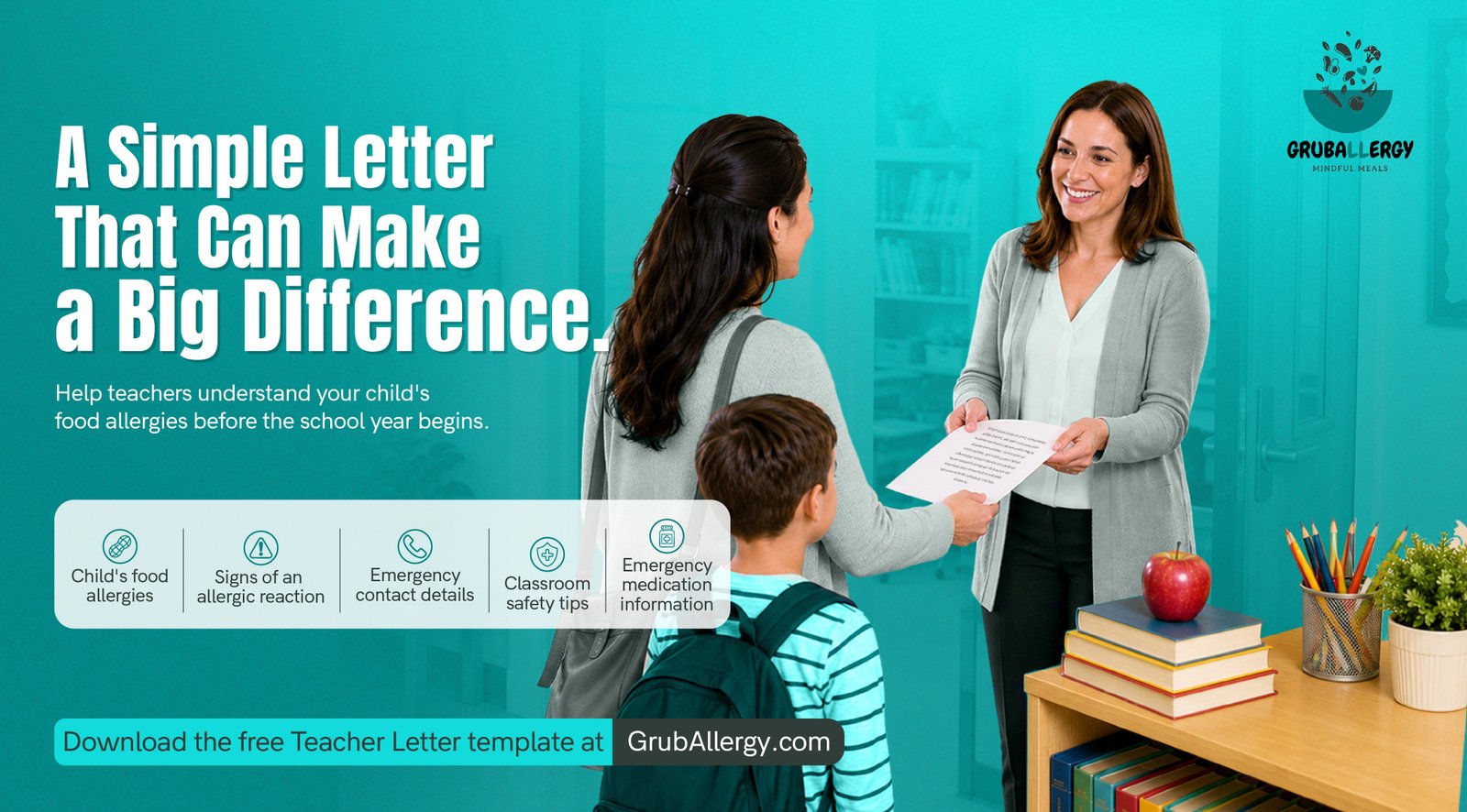
Here's a template you can copy directly, fill in your child's specifics, and send to the teacher before the school year starts (or right after diagnosis, mid-year).
Subject: [Child's Name]'s Food Allergy What You Need to Know
Dear [Teacher's Name],
My name is [Parent's Name], and my child, [Child's Name], is in your class this year. I wanted to reach out directly to make sure you have everything you need to keep [Child's Name] safe and included.
The allergy: [Child's Name] has a diagnosed allergy to [specific allergen(s)]. Even a small or trace amount can cause a reaction, so we ask that this be treated as a strict avoidance, not just a "less of" situation.
What a reaction can look like: [List specific symptoms from your child's action plan e.g., hives, swelling of the face or lips, difficulty breathing, vomiting].
What to do: [Child's Name]'s Food Allergy Action Plan and emergency medication are on file with the school nurse/office. If you ever suspect a reaction, please contact [nurse/designated staff] immediately [Child's Name] should never be left alone or asked to "wait and see."
A few practical things that help:
-
Advance notice of any classroom snacks, treats, or food-based activities, so we can send a safe alternative
-
Hand-washing or wipe-down before meals or snack time, if possible
-
Keeping [specific allergen] out of classroom rewards, crafts, or science materials where feasible
-
Letting us know about any planned parties, field trips, or special events involving food
I'm always happy to answer questions, provide safe snacks for the classroom, or talk through anything that comes up please don't hesitate to reach out anytime at [phone/email]. Thank you for helping make this a safe, normal year for [Child's Name].
Warmly, [Parent's Name] [Phone Number] | [Email]
When and How to Send It
- Send it before the first day, if possible, or as soon as an allergy is diagnosed mid-year
- Send it by email, so there's a written record, and consider printing a copy for the teacher's classroom binder
- Follow up with a quick in-person or phone conversation in the first week the letter opens the door, but a short conversation builds the relationship
- Attach the official school forms (504 Plan or medical action plan) alongside the letter the letter provides context; the form provides the legal documentation
Make It Easy for the Whole Classroom, Not Just Your Child
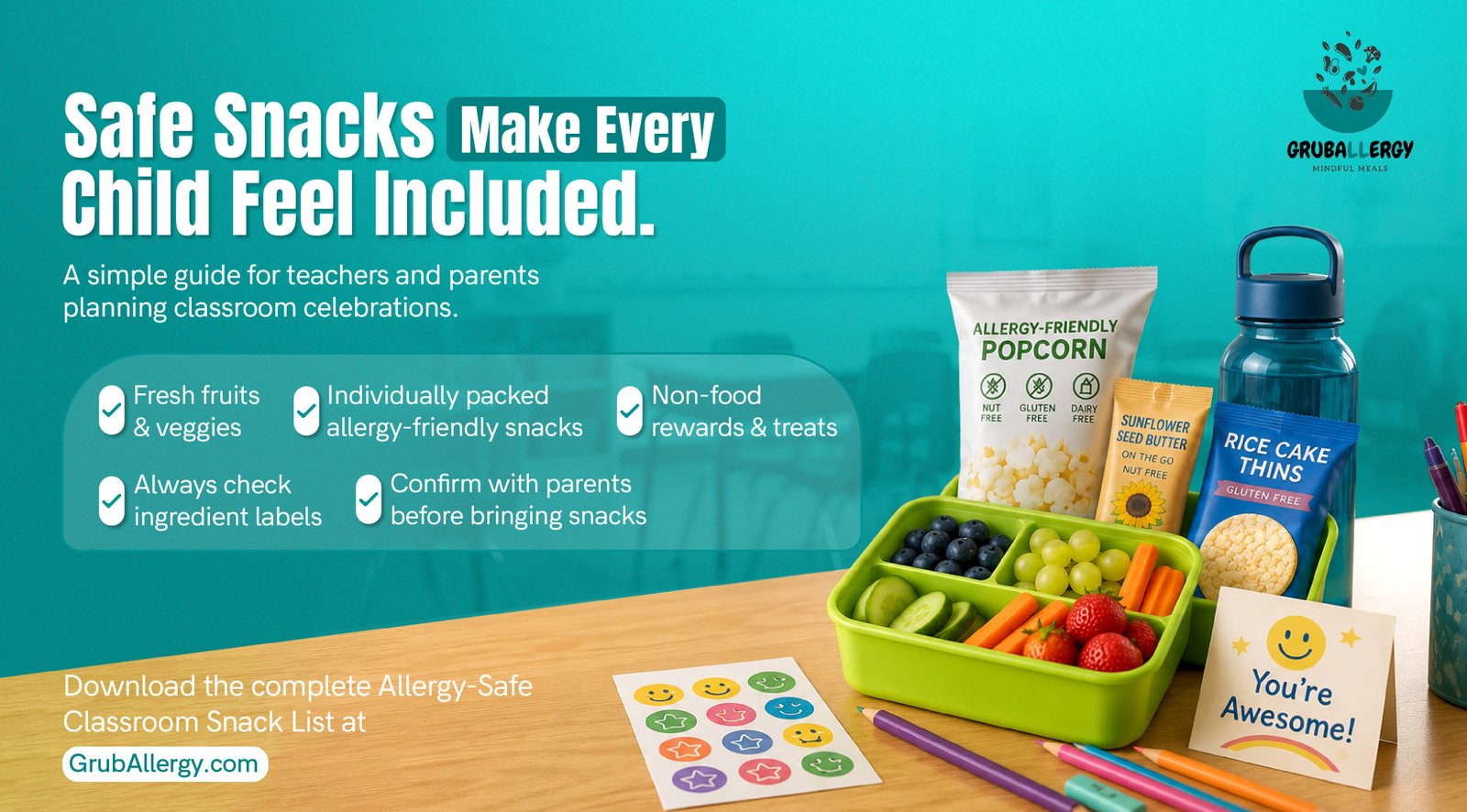
Offering to send a stash of allergy-safe treats for birthdays or parties takes pressure off the teacher and keeps your child included in classroom celebrations rather than singled out. Our kids-friendly recipes and allergy-safe snacks are built for exactly this easy to make in batches and safe to share.
Final Thought
A well-written letter won't replace the official paperwork, but it often does something the paperwork can't: it turns a list of restrictions into a real understanding of your child. Most teachers want to get this right a clear, specific letter just makes it possible.
For more allergy-safe recipes to share with your child's classroom, browse our lunch box specials or reach out through our free allergy consultation.
FAQ
-
Send a short, specific letter outlining the allergen, symptoms, emergency steps, and practical classroom requests, backed by the school's official medical form or 504 Plan, ideally before the school year starts.

-
Include the specific allergen(s), what a reaction looks like, where emergency medication is kept, who to contact immediately, and any practical classroom accommodations, such as advance notice of snacks or food-based activities.
-
Both matter. A letter builds understanding and relationship, but a 504 Plan or official medical form is the legally binding document the school is required to follow the letter should accompany, not replace, formal documentation.
-
Yes, if possible. A short in-person or phone conversation in the first week helps confirm the teacher has read and understood the letter, and gives them a chance to ask questions directly.
-
Follow up in writing, loop in the school nurse or 504 coordinator, and reference the official action plan or 504 Plan, which the school is legally required to follow regardless of an individual teacher's comfort level.
You may also like

Leave a Reply
ABOUT AUTHOR

Hi! I’m Nimisha C..
My tryst with cooking began when we got to know about food allergies for our son. Taken aback with the shock and restrictions that his diet had and also worried about nutrition...
ABOUTPOPULAR RECIPE
(1).png)
August 6, 2026
(3).png)
August 16, 2026
FOLLOW US


LATEST BLOGS
August 18, 2026


Get a free consultation with GrubAllergy.
Share your child's food allergy history, and let us guide you with expert advice on managing and navigating food allergies with confidence.