
Creating an allergy friendly kitchen can feel overwhelming when you’re just starting out. Between reading ingredient labels, avoiding cross-contamination, and finding safe substitutes, many home cooks worry that allergy-aware cooking will be restrictive or complicated. The good news? With the right setup and habits, an allergy friendly kitchen can be just as joyful, flavorful, and stress-free as any other kitchen.
Whether you’re managing food allergies for yourself, a child, or a family member, building a safe cooking space is one of the most empowering steps you can take. A thoughtfully organized kitchen reduces risk, boosts confidence, and makes everyday meals easier. When you combine smart planning with food allergy safe cooking practices, you’ll spend less time worrying and more time enjoying meals.
This beginner-friendly checklist walks you through everything you need—from pantry basics and cleaning routines to essential kitchen tools for allergies—so you can cook safely without sacrificing taste or creativity. Think of it as your foundation for stress-free, inclusive home cooking.
What Is an Allergy-Friendly Kitchen?
An allergy friendly kitchen is a cooking space designed to minimize exposure to allergens while making meal preparation safe and practical. It’s not about eliminating all allergens from your home unless medically necessary; instead, it’s about control, awareness, and consistency.
In an allergy-aware kitchen, ingredients are clearly labeled, surfaces are cleaned with intention, and cooking tools are chosen to prevent cross-contact. This environment supports food allergy safe cooking by reducing accidental exposure and helping cooks stay organized and confident.
For beginners, the goal is simple: create routines and systems that make safe cooking second nature. With time, your kitchen becomes a place of comfort rather than caution.
Why This Checklist Is Perfect for Allergy-Sensitive Diets
Food allergies don’t just affect what you eat—they affect how you shop, cook, store, and clean. This checklist approach breaks everything into manageable steps, making it easier to build an allergy friendly kitchen without feeling overwhelmed.
Here’s why it works:
- It prioritizes prevention over reaction
- It supports consistent food allergy safe cooking habits
- It helps you choose reliable kitchen tools for allergies
- It adapts to multiple allergy types and dietary needs
Instead of guessing or relying on memory, you’ll have a clear system that supports safe meals every day.
Ingredients & Allergy-Safe Substitutions
Your pantry is the heart of your allergy friendly kitchen. Start by reviewing everything you currently own and removing items that pose a risk or don’t align with your needs.
Pantry Staples to Look For
- Naturally allergen-free grains (rice, millet, quinoa)
- Single-ingredient spices and herbs
- Certified allergy-safe oils
- Clearly labeled packaged foods
Smart Substitution Tips
- Use seed butters instead of nut butters
- Choose plant-based milks made in dedicated facilities
- Replace wheat flour with gluten-free blends as needed
- Swap eggs with flax or chia mixtures for baking
Keeping substitutions consistent makes food allergy safe cooking easier and helps prevent accidental mistakes during busy meal prep.
Step-by-Step: Setting Up Your Allergy-Friendly Kitchen
Step 1: Deep Clean & Reset
Before organizing, thoroughly clean all surfaces, drawers, and shelves. This removes hidden allergen residues and gives you a fresh start for your allergy friendly kitchen.
Step 2: Create Clear Zones
Designate areas for:
- Allergy-safe foods
- High-risk or restricted items (if applicable)
- Cooking and prep spaces
Clear separation is a key principle of food allergy safe cooking, especially in shared households.
Step 3: Label Everything
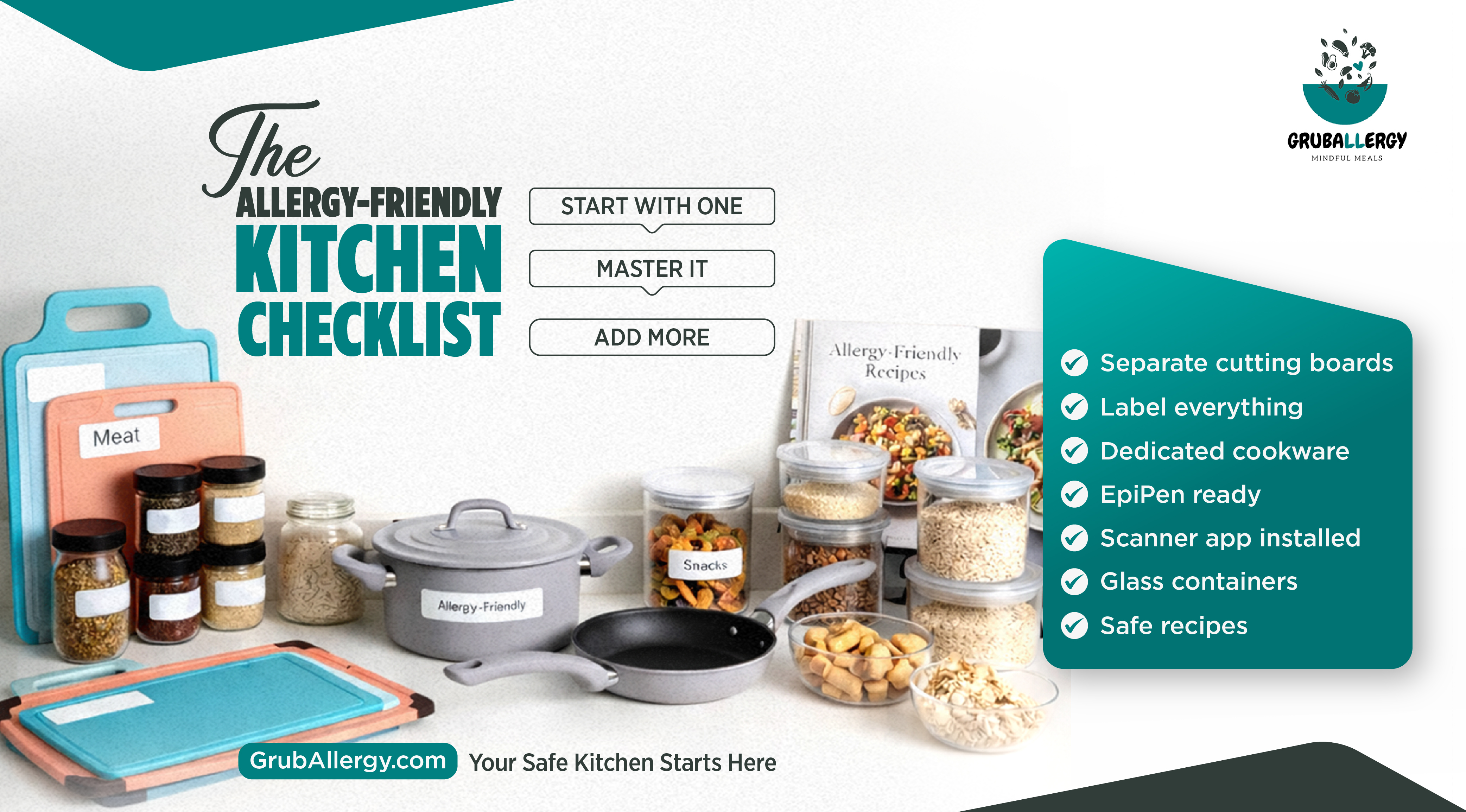
Use bold, easy-to-read labels for containers, shelves, and appliances. This is especially helpful when multiple people cook in the same kitchen.
Step 4: Upgrade Your Tools
Invest in dedicated kitchen tools for allergies that are used only for safe cooking. This includes cutting boards, utensils, and baking equipment.
Tips for Best Taste & Texture in Allergy-Safe Cooking
Many beginners worry that an allergy friendly kitchen means bland food. In reality, safe cooking can be incredibly flavorful with the right techniques.
- Toast spices to deepen flavor
- Use fresh herbs generously
- Balance textures with crunchy toppings and creamy bases
- Experiment with global cuisines that naturally support food allergy safe cooking
Having reliable kitchen tools for allergies, like non-stick pans and high-speed blenders, also helps maintain great texture and consistency.
Nutritional Benefits of an Allergy-Friendly Kitchen
A well-planned allergy friendly kitchen often leads to more whole, nourishing meals. Cooking at home gives you control over ingredients, portion sizes, and preparation methods.
Benefits include:
- Improved digestion and gut health
- Better nutrient balance
- Reduced reliance on ultra-processed foods
- Greater awareness of food quality
When you practice food allergy safe cooking, you’re also more likely to explore diverse ingredients that add vitamins, minerals, and fiber to your diet.
Common Mistakes to Avoid
Even with the best intentions, beginners can make small errors that increase risk. Avoid these common pitfalls:
- Using shared sponges or dishcloths
- Forgetting to clean handles and knobs
- Mixing safe and unsafe tools
- Skipping labels on bulk items
- Assuming “natural” means allergen-free
Staying mindful of these habits helps protect the integrity of your allergy friendly kitchen and ensures your kitchen tools for allergies remain truly safe.
Conclusion: Your First Step Toward Confident, Safe Cooking
Building an allergy friendly kitchen isn’t about perfection—it’s about progress. With thoughtful organization, smart ingredient choices, and consistent routines, safe cooking becomes second nature. As you grow more comfortable with food allergy safe cooking, you’ll discover new flavors, techniques, and meals that bring joy back to your table.
At gruballergy.com, we believe everyone deserves delicious food without fear. Use this checklist as your starting point, explore more allergy-aware recipes and guides, and take pride in creating a kitchen that supports health, confidence, and connection—one safe meal at a time.
FAQ
-
Not always. An allergy friendly kitchen focuses on control and prevention. Many families safely manage allergens with proper zones, tools, and food allergy safe cooking practices.

-
Dedicated cutting boards, utensils, cookware, and storage containers are essential kitchen tools for allergies that help prevent cross-contact.
-
Daily surface cleaning and regular deep cleans are ideal. Consistency is key in maintaining an allergy friendly kitchen.
-
It doesn’t have to be. Simple ingredients and thoughtful planning make food allergy safe cooking affordable and sustainable over time.
-
Absolutely. With the right checklist and reliable kitchen tools for allergies, beginners can build confidence and cook safely every day.
You may also like

Leave a Reply
ABOUT AUTHOR

Hi! I’m Nimisha C..
My tryst with cooking began when we got to know about food allergies for our son. Taken aback with the shock and restrictions that his diet had and also worried about nutrition...
ABOUTPOPULAR RECIPE

January 3, 2026
.png)
January 3, 2026
FOLLOW US


LATEST BLOGS
January 13, 2026
January 6, 2026



Get a free consultation with GrubAllergy.
Share your child's food allergy history, and let us guide you with expert advice on managing and navigating food allergies with confidence.