
If mealtimes in your home feel more like negotiations than family time, you're not alone. Feeding a picky eater is challenging on its own, but when food allergies are added to the mix, the task can seem overwhelming. Parents often worry about whether their child is getting enough nutrition while also trying to avoid allergens and introduce new foods. The result? Stressful meals, repeated food refusals, and frustration for everyone at the table.
The good news is that picky eating and food allergies don't have to turn every meal into a battle. With patience, consistency, and the right strategies, you can help your child build confidence around food while keeping every bite safe. The goal isn't to force children to eat—it's to create positive experiences that encourage curiosity and trust.
This guide shares practical tips, expert-backed strategies, and simple meal ideas to help you feed a picky eater with food allergies while making mealtimes calmer, healthier, and more enjoyable for the whole family.
Why Are Children with Food Allergies Often Picky Eaters?
Children with food allergies often have a more complicated relationship with food than other children. They may associate eating with discomfort, fear, or unfamiliar experiences, making them hesitant to try new foods.
Common reasons include:
- Fear of allergic reactions
- Limited food choices from an early age
- Previous negative experiences with certain foods
- Sensitivity to textures, smells, or colors
- Anxiety about eating outside the home
Understanding the reason behind picky eating helps parents respond with empathy rather than frustration.
Why Mealtime Battles Usually Make Things Worse
When parents feel anxious about nutrition, it's natural to encourage children to "just take one bite." However, pressure often has the opposite effect.
Frequent mealtime battles can:
- Increase anxiety around food
- Make children more resistant
- Create negative associations with meals
- Reduce willingness to try new foods
Instead of focusing on how much your child eats, focus on creating a relaxed, positive eating environment.
Build a Safe and Positive Mealtime Routine
Children thrive on consistency.
Try to:
- Serve meals at regular times
- Eat together as a family whenever possible
- Limit distractions like television or tablets
- Keep conversations positive
A predictable routine helps children feel more comfortable exploring food at their own pace.
Start with Foods They Already Trust
When introducing new allergy-friendly meals, begin with familiar favorites.
For example:
- Add one new vegetable beside a favorite fruit.
- Pair a new spread with a trusted cracker.
- Serve a familiar pasta with a different allergy-safe sauce.
Small changes feel less overwhelming than completely unfamiliar meals.
Introduce One New Food at a Time
Offering several unfamiliar foods in one meal can overwhelm children.
Instead:
- Introduce one new ingredient alongside familiar foods.
- Allow children to look, smell, and touch the food before tasting.
- Don't expect acceptance immediately.
Research shows that children may need multiple exposures before willingly trying a new food.
Make Meals Fun Without Adding Pressure
Children are naturally curious.
Simple ideas include:
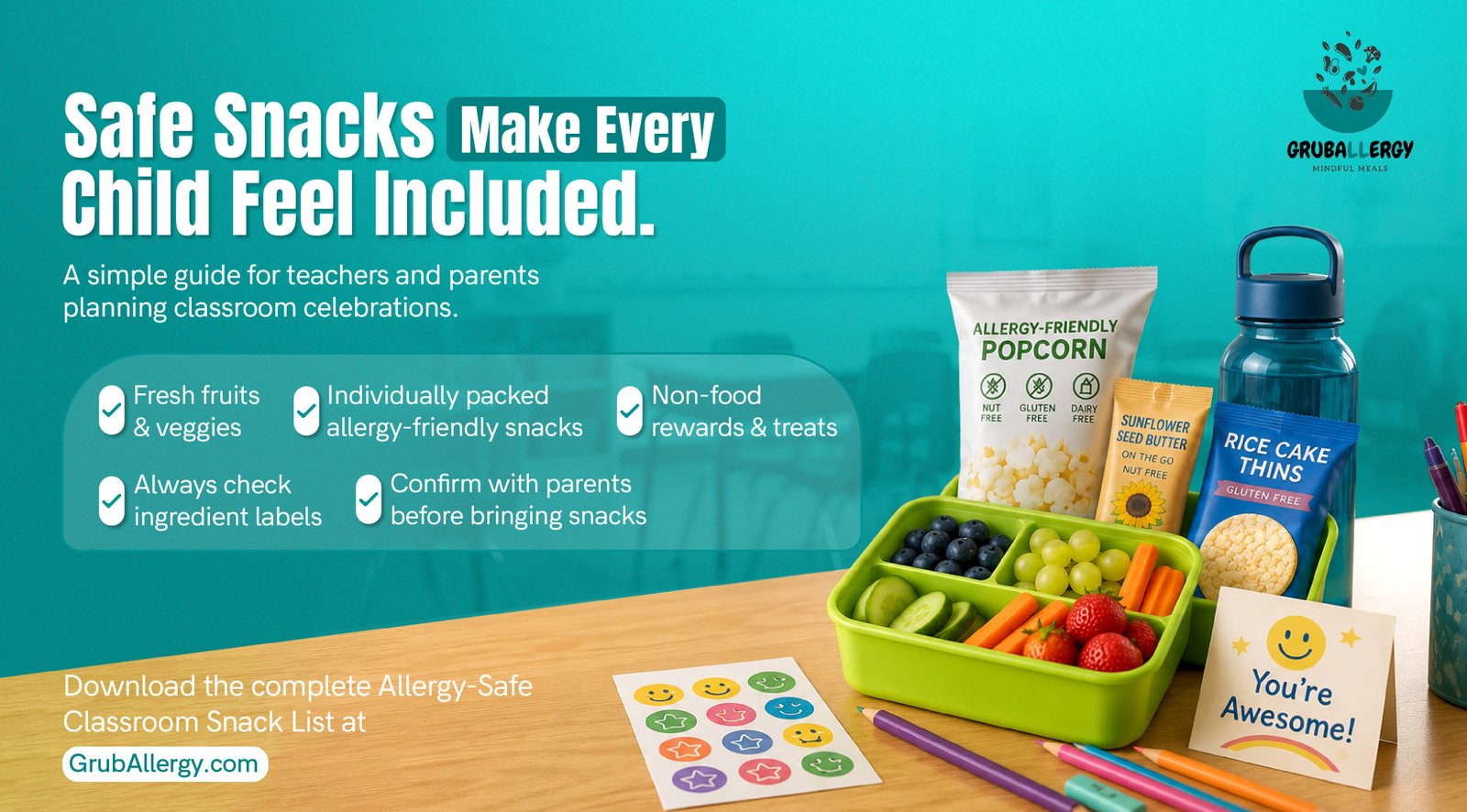
- Cut fruits into fun shapes.
- Create colorful lunch boxes.
- Arrange vegetables into smiley faces.
- Build "DIY" snack plates with different safe foods.
Making food visually appealing encourages interest without forcing participation.
Give Kids Some Control
Children are more likely to eat meals they've helped create.
Offer simple choices such as:
- "Would you like strawberries or grapes?"
- "Should we use cucumber or carrots today?"
- "Would you like your sandwich cut into triangles or squares?"
Small decisions give children confidence while keeping parents in control of food safety.
Focus on Progress, Not Perfection
Success isn't measured by finishing every meal.
Celebrate small victories such as:
- Trying a new food
- Touching or smelling an unfamiliar ingredient
- Sitting calmly through dinner
- Helping prepare meals
Every positive experience builds confidence.
Easy Allergy-Friendly Meals for Picky Eaters
Breakfast
- Fruit smoothies
- Overnight oats
- Allergy-friendly pancakes
- Dairy-free yogurt with fruit
Lunch
- Safe sandwiches
- Rice bowls
- Pasta salad
- Homemade snack boxes
Dinner
- Rice with roasted vegetables
- Homemade soup
- Gluten-free pasta
- Lettuce wraps
Snacks
- Apple slices
- Vegetable sticks
- Rice cakes
- Homemade energy bites
Simple meals with familiar ingredients often receive the best response.
Tips for Encouraging New Foods
Try these gentle strategies:
- Model eating the food yourself.
- Avoid using dessert as a reward.
- Let children help grocery shop.
- Invite them to wash vegetables.
- Encourage curiosity instead of pressure.
Positive exposure works better than persuasion.
Common Mistakes Parents Should Avoid
Avoid:
- Forcing children to clean their plate
- Offering separate meals every night
- Comparing siblings' eating habits
- Labeling children as "picky"
- Giving up after one refusal
Remember that food acceptance often takes time.
When Should You Seek Professional Help?
If your child:
- Eats an extremely limited number of foods
- Shows signs of poor growth
- Experiences severe anxiety around meals
- Frequently skips meals
Speak with your pediatrician or a registered dietitian experienced in food allergies.
Professional guidance can make a significant difference.
Conclusion
Feeding a picky eater with food allergies can feel exhausting, but every small step matters. Building trust around food takes patience, consistency, and understanding. By creating a positive mealtime environment, offering safe choices, and removing pressure, you help your child develop confidence that will benefit them for years to come.
Remember that progress isn't measured by a clean plate. It's measured by curiosity, comfort, and positive experiences with food. Every new taste, every shared meal, and every small success is a step toward healthier eating habits.
At gruballergy.com, we believe that allergy-friendly meals should bring families together—not create stress. With the right approach, mealtimes can become enjoyable again, one safe bite at a time.
FAQ
-
Yes. Food allergies can make children more cautious around eating, especially if they've had previous reactions or dietary restrictions.

-
Some children need 10–15 exposures before they feel comfortable tasting a new food.
-
No. Gentle encouragement works much better than pressure.
-
Use colorful ingredients, fun presentations, and involve children in meal preparation.
-
Many children become more adventurous eaters over time, especially when meals remain positive and pressure-free.
You may also like

Leave a Reply
ABOUT AUTHOR

Hi! I’m Nimisha C..
My tryst with cooking began when we got to know about food allergies for our son. Taken aback with the shock and restrictions that his diet had and also worried about nutrition...
ABOUTPOPULAR RECIPE
(1).png)
August 6, 2026
(3).png)
August 16, 2026
FOLLOW US


LATEST BLOGS
August 18, 2026



Get a free consultation with GrubAllergy.
Share your child's food allergy history, and let us guide you with expert advice on managing and navigating food allergies with confidence.