.jpg)
Summer camp should feel like freedom bug bites, campfire songs, and a break from routine. But if your child has food allergies, that same freedom can feel like a risk you're not sure how to hand over. The good news: with the right prep, your child can have a completely normal, joyful camp experience while staying safe.
This checklist walks you through exactly what to pack, who to talk to, and what to confirm before drop-off day, so you're not scrambling in the parking lot with a bag full of "just in case" items and a knot in your stomach.
Quick Answer: What Do You Need for Allergy-Safe Summer Camp?
At minimum, every camper with food allergies needs: two epinephrine auto-injectors, a written emergency action plan signed by their doctor, allergy-labeled snacks and meals, a way to communicate reactions to counselors (medical ID or card), and a pre-camp conversation with staff about ingredients, cross-contact, and emergency response. Everything below breaks these down into an actionable list.
1. Start With Paperwork 4 to 6 Weeks Before Camp
Camps need documentation early, not the morning of drop-off.
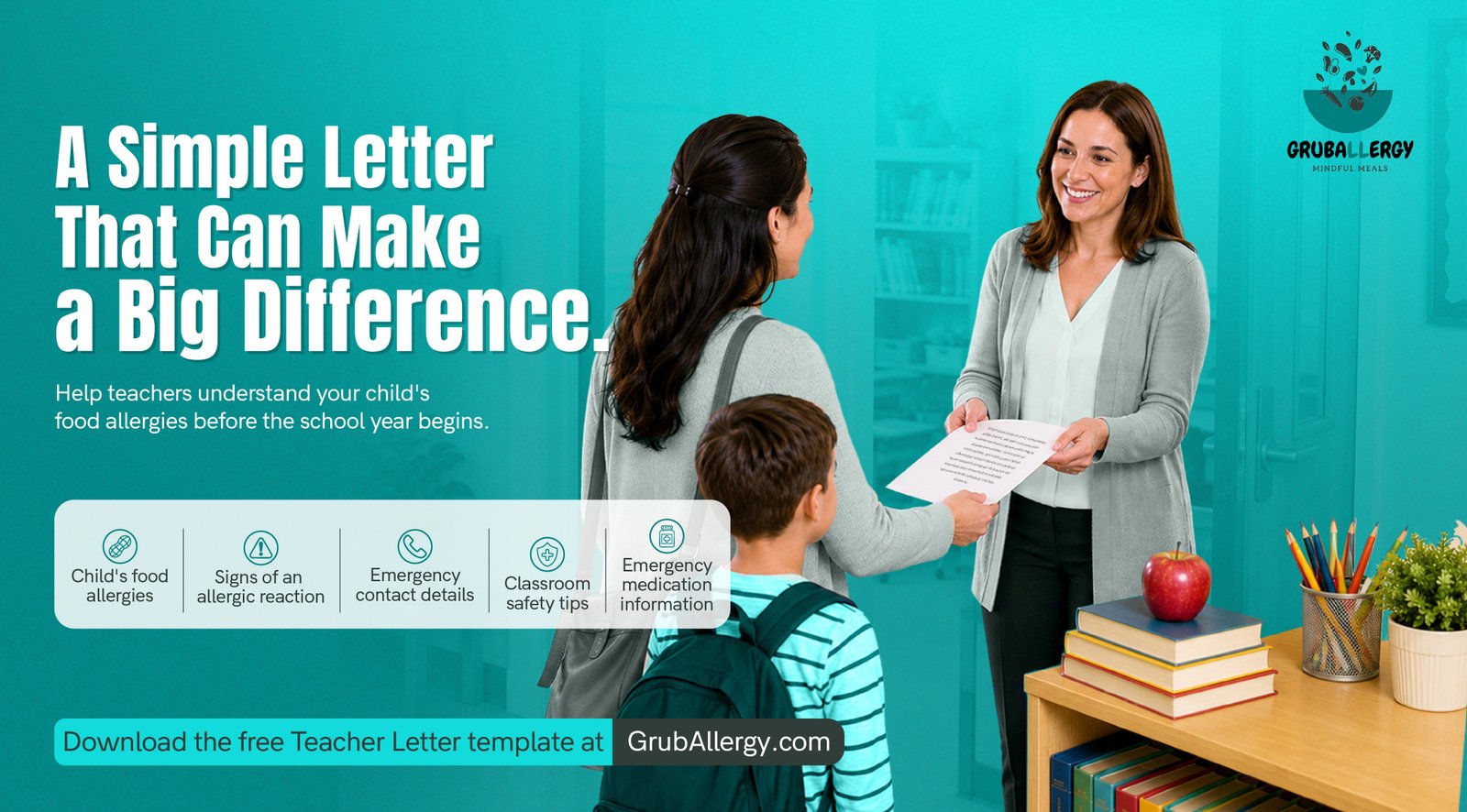
- Food Allergy Action Plan (FAAP), signed by your child's doctor or allergist, listing specific allergens, symptoms to watch for, and step-by-step emergency response
- Camp medical form, completed and submitted by the camp's deadline (ask if there's a separate allergy disclosure form)
- Written permission for camp staff to administer epinephrine or other medication
- A photo of your child attached to their emergency plan, in case a substitute counselor needs to identify them quickly
- Copies of prescriptions for antihistamines or inhalers, if relevant
Tip: Email the camp nurse or director directly, not just the front desk. A named contact who has personally reviewed your child's file makes a real difference in an emergency.
2. The Non-Negotiable Medical Pack
This bag goes with your child everywhere at camp cabin, dining hall, pool, and off-site trips.
- Two epinephrine auto-injectors (not one a second dose may be needed before help arrives)
- Antihistamine (liquid or chewable, camp-approved)
- A written copy of the emergency action plan, laminated if possible
- Medical ID bracelet or necklace stating the allergy clearly
- A card in the camper's own words: "I am allergic to peanuts and tree nuts. If I feel my throat getting tight or my face swelling, get an adult immediately."
- Backup inhaler or asthma medication, if applicable
- A small first-aid kit for minor scrapes, so allergy meds aren't dug through unnecessarily
3. Talk to the Camp Questions to Ask Before You Commit
Before the final deposit, get clear answers to:
- Is there a nurse or trained staff member on-site at all times, including overnight?
- Who is trained and authorized to administer epinephrine, and how quickly can they respond from the farthest point on camp grounds?
- How does the kitchen handle cross-contact between allergens (separate prep surfaces, utensils, fryers)?
- Can you review the weekly menu in advance?
- Is outside food from home allowed, and is there safe storage (a labeled fridge or bin) for it?
- How are food allergies communicated to substitute counselors, bus drivers, or off-site trip leaders?
- What is the camp's exact protocol if a reaction occurs who calls whom, and how fast is the nearest hospital?
If a camp can't answer these clearly, that's valuable information too.
4. Packing List: Allergy-Safe Food and Snacks
Even at food-provided camps, many parents choose to send backup options for peace of mind.
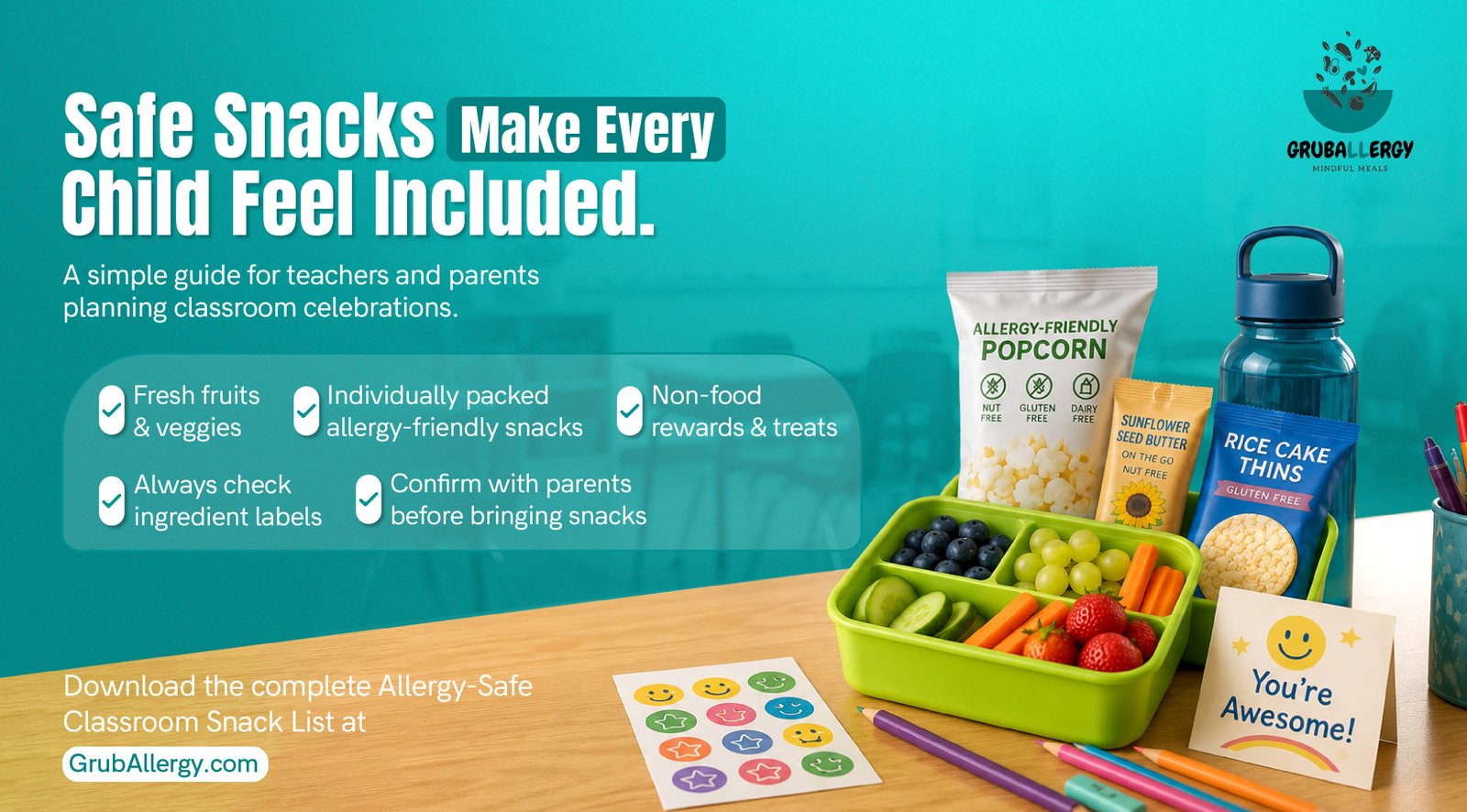
- Individually wrapped, allergen-labeled snacks (check labels every time formulations change)
- A few "safe" packaged meals for days the dining hall menu is unclear
- Allergy-friendly treats for birthdays or camp celebrations, so your child isn't left out
- A refillable water bottle labeled with your child's name
- Wet wipes for hand-cleaning before meals (surface residue from allergens is a real risk)
For snack inspiration your child will actually be excited to pack, browse our allergy-free snack recipes and kids' lunch box specials ,many travel well and stay fresh for days.
5. Prep Your Child, Not Just the Camp
Camp is often the first time a child manages their allergy semi-independently. A little rehearsal goes a long way.
- Practice saying, out loud, "I can't eat that, I have a food allergy" role-play makes it feel normal, not scary
- Teach them to recognize early symptoms in their own body (itchy mouth, tight throat, hives) and to tell an adult immediately, even if they're not 100% sure
- Practice using their epinephrine auto-injector trainer at home so it isn't unfamiliar
- Reassure them that asking questions about food, or saying no to a snack, is never something to feel embarrassed about
- If your child is anxious, validate that feeling managing an allergy at camp is a genuinely big responsibility for a kid, and it's normal to feel nervous about it while still being ready for it
6. Labeling and Communication Tools
- Label every food container, water bottle, and medical bag with your child's name and allergy in large, clear print
- Consider a colored wristband system if the camp uses one for quick visual identification
- Share your emergency contact info with at least two camp staff members, not just one
- Set up a daily or every-other-day check-in call or text, if the camp allows it
Final Thought
Sending a child with food allergies to camp can feel like handing over control you're used to holding tightly. But preparation is what makes that handoff safe not worry. With the right paperwork, the right conversations, and a child who feels confident (not fearful) about their allergy, camp can be exactly what it's meant to be: fun.
For more allergy-safe ideas for the season ahead, explore our kids-friendly recipes.
FAQ
-
Send at least two epinephrine auto-injectors. A single dose may not fully stop a severe reaction, and a second injection is sometimes needed before emergency responders arrive.

-
Most camps allow labeled outside food, especially for common allergens like peanuts, tree nuts, dairy, or eggs. Confirm storage details (a dedicated fridge shelf or bin) with the camp before drop-off.
-
It should list the specific allergens, expected symptoms ranging from mild to severe, exact step-by-step treatment instructions, medication dosages, and emergency contact numbers, signed by your child's doctor.
-
Ask about on-site medical staff, epinephrine-trained personnel, kitchen cross-contact procedures, and how allergy information is passed to all staff, including substitutes and trip leaders. A camp with clear, confident answers to all of these is a strong
-
There's no fixed age — it depends on the child's comfort recognizing symptoms and communicating them. Many kids start taking on some independence around age 8–10, with camp staff still holding primary responsibility for emergency response.
You may also like

Leave a Reply
ABOUT AUTHOR

Hi! I’m Nimisha C..
My tryst with cooking began when we got to know about food allergies for our son. Taken aback with the shock and restrictions that his diet had and also worried about nutrition...
ABOUTPOPULAR RECIPE
(1).png)
August 6, 2026
(3).png)
August 16, 2026
FOLLOW US


LATEST BLOGS
August 18, 2026



Get a free consultation with GrubAllergy.
Share your child's food allergy history, and let us guide you with expert advice on managing and navigating food allergies with confidence.